
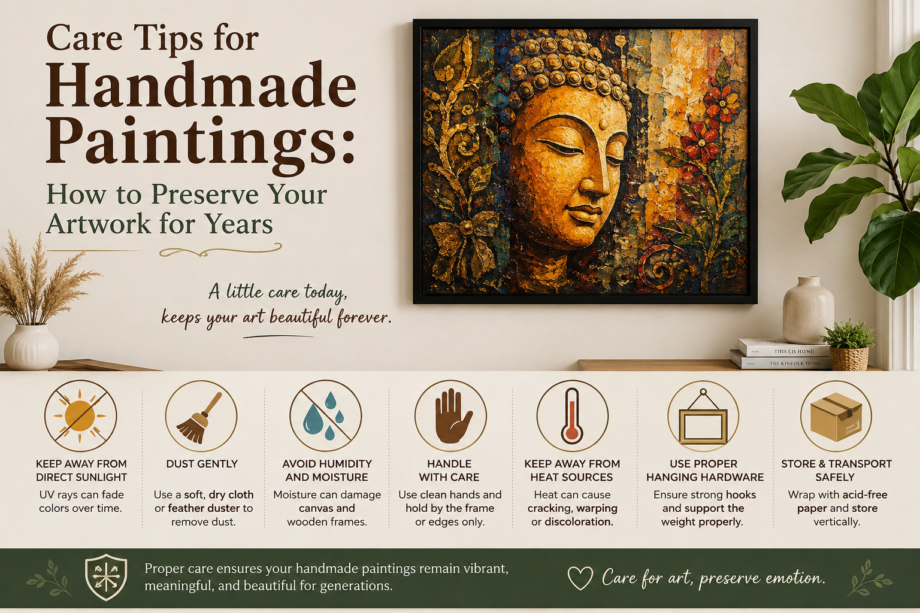
Handmade paintings add elegance, creativity, and personality to any home décor space. Whether you own handmade canvas paintings, acrylic artwork, textured wall art, mandala paintings, or traditional Indian paintings, proper care is essential to preserve their beauty and artistic value for years.
Unlike mass-produced prints, original handmade paintings require thoughtful maintenance and protection from sunlight, dust, moisture, and environmental damage. Proper handmade painting care not only maintains the vibrancy of colors and textures but also helps preserve the emotional and decorative value of your artwork.
If you are searching for the best care tips for handmade paintings, this guide will help you understand how to preserve canvas paintings, clean artwork safely, and maintain decorative wall art effectively. With the right artwork preservation techniques, your handmade wall art can remain beautiful for generations.
Why Handmade Painting Care and Maintenance Is Important
Every handmade painting is crafted with creativity, precision, and artistic dedication. Exposure to direct sunlight, humidity, dust, and improper handling can gradually damage the colors, texture, and overall appearance of the artwork.
Proper artwork maintenance helps:
- Preserve original colors and intricate details
- Prevent fading and discoloration
- Protect the canvas and frame from damage
- Increase the lifespan of handmade wall art
- Maintain artistic and sentimental value
Keep Handmade Paintings Away from Direct Sunlight
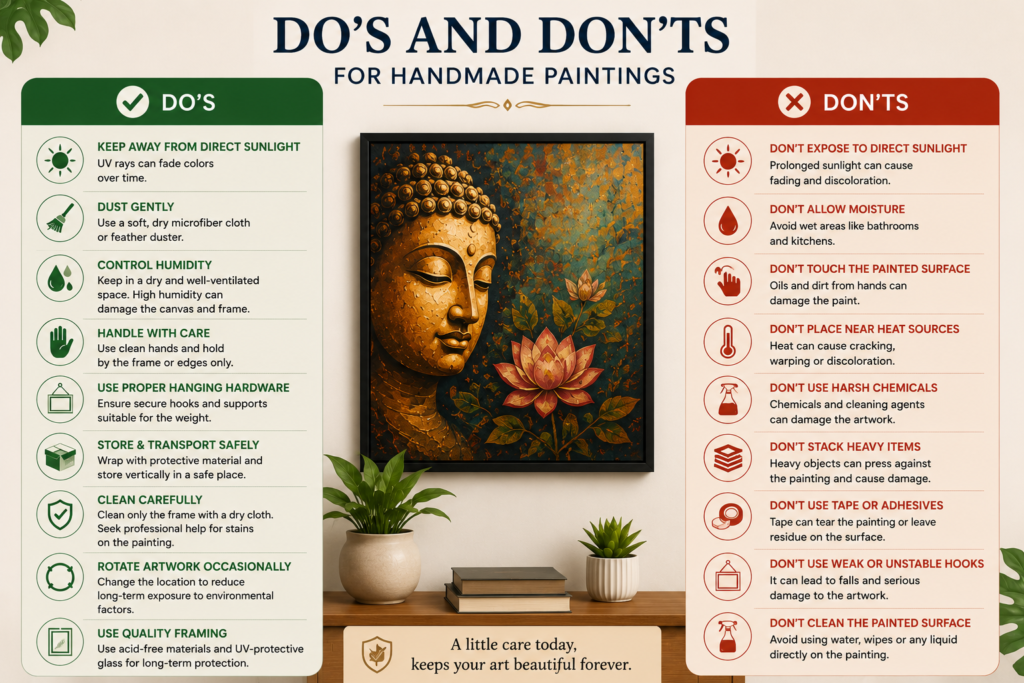
One of the most important canvas painting care tips is avoiding direct sunlight. Continuous exposure to UV rays can fade colors and weaken the painting materials over time.
Best Practices:
- Hang handmade paintings on walls that do not receive harsh sunlight.
- Use curtains or blinds to reduce UV exposure.
- Consider UV-protective glass for framed artwork.
Dust Handmade Wall Art Gently
Dust buildup can affect the appearance and texture of decorative wall art and canvas paintings.
Best Practices:
- Use a soft, dry microfiber cloth or feather duster.
- Dust the painting gently without applying pressure.
- Avoid wet cloths, cleaning sprays, or chemical cleaners.
Avoid High Humidity and Moisture
Humidity and moisture can damage handmade canvas paintings, wooden frames, and paint layers.
Best Practices:
- Keep paintings away from bathrooms and damp spaces.
- Maintain moderate indoor humidity levels.
- Use a dehumidifier if necessary.
Handle Artwork with Clean Hands
Natural oils, dirt, and moisture from hands can transfer onto the artwork surface and damage delicate paint textures.
Best Practices:
- Wash and dry your hands before touching artwork.
- Hold paintings by the edges or frame only.
- Avoid touching the painted surface directly.
Keep Paintings Away from Heat Sources
Excessive heat can cause cracking, warping, and discoloration in handmade wall paintings.
Best Practices:
- Avoid placing artwork near heaters, fireplaces, and kitchen stoves.
- Maintain a stable room temperature for artwork preservation.
Use Proper Hanging Hardware
Improper hanging methods can lead to accidental falls and serious damage to original artwork.
Best Practices:
- Use strong hooks and wall anchors.
- Ensure the hanging hardware supports the painting’s weight securely.
- Regularly inspect hooks and hanging wires.
Protect Handmade Paintings During Transportation
Proper packaging is essential while moving or storing handmade canvas art.
Best Practices:
- Wrap paintings in acid-free paper or bubble wrap.
- Store artwork vertically in a dry and secure location.
- Avoid stacking heavy items on top of paintings.
Clean Stains Carefully
Never attempt to clean the painted surface aggressively, as it may damage the artwork permanently.
Best Practices:
- Use a dry cloth to clean only the frame.
- Avoid water and harsh cleaning chemicals.
- Consult a professional art conservator for stubborn stains or restoration.
Rotate Artwork Occasionally
Rotating decorative wall art occasionally helps reduce long-term exposure to environmental factors like sunlight and moisture.
Best Practices:
- Move artwork between rooms when possible.
- Inspect paintings regularly for signs of fading or moisture damage.
Consider Professional Framing for Handmade Paintings
Professional framing not only enhances presentation but also adds an extra layer of protection to handmade paintings.
Best Practices:
- Use acid-free framing materials.
- Choose UV-protective glass for valuable artwork.
- Select frames that complement your home décor style.
Best Places to Display Handmade Paintings at Home
Proper placement plays an important role in preserving handmade wall art and decorative paintings.

Ideal locations include:
- Living rooms
- Bedrooms
- Hallways
- Offices
- Study rooms
These spaces usually maintain stable temperatures and lower humidity, making them suitable for displaying handmade canvas paintings and decorative wall décor.
Why Handmade Canvas Paintings Require Special Care
Original handmade artwork carries emotional, artistic, and decorative value that cannot be replaced. Whether it is a Buddha painting, Ganesha painting, abstract canvas art, textured wall painting, or traditional Indian artwork, proper maintenance ensures that its beauty and meaning last for decades.
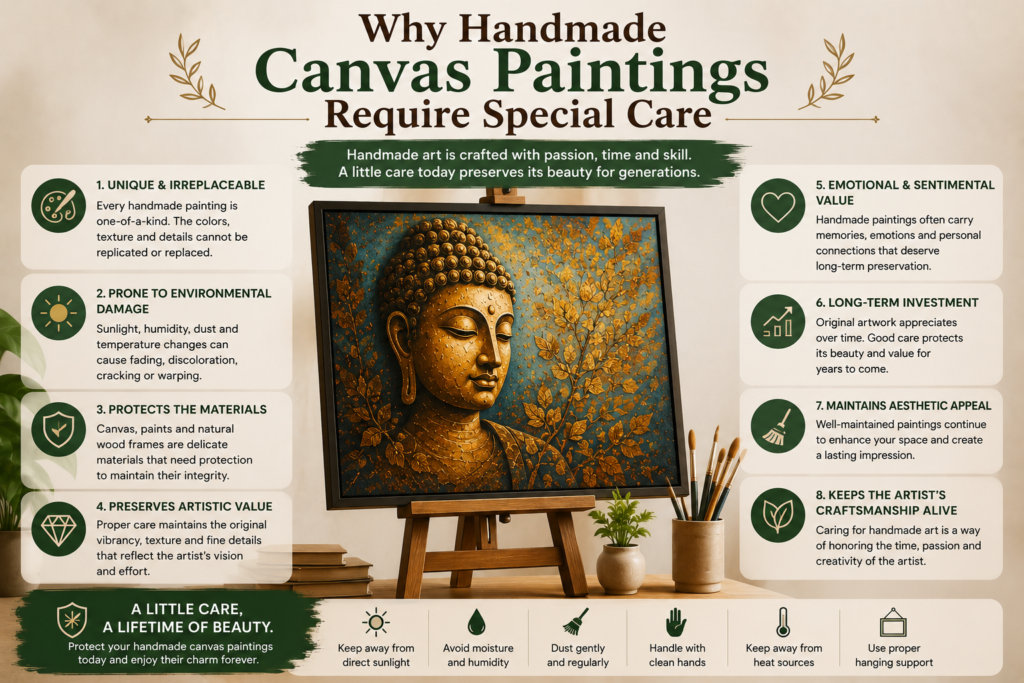
Investing in handmade wall art also means investing in craftsmanship and creativity. Proper artwork preservation protects both the visual appeal and long-term value of your paintings.
Final Thoughts on Preserving Handmade Paintings
Proper handmade painting care is simple yet essential for maintaining the beauty and lifespan of your artwork. By protecting paintings from sunlight, dust, humidity, heat, and improper handling, you can preserve their colors, texture, and artistic charm for years.
Whether you decorate your home with handmade canvas paintings, modern wall art, traditional Indian paintings, or textured artwork, these practical painting care tips will help keep your cherished artwork vibrant and beautiful for generations.
Looking for premium handmade paintings and decorative wall art? Explore unique handcrafted canvas paintings, textured artwork, mandala art, and traditional Indian wall décor collections to elevate your home interiors beautifully.
Frequently Asked Questions (FAQs)
1. How do I clean handmade paintings?
To clean handmade paintings safely, use a soft, dry microfiber cloth or feather duster to gently remove dust without damaging the artwork.
2. Can sunlight damage handmade paintings?
Yes, prolonged exposure to direct sunlight can fade colors and weaken painting materials over time.
3. Is it safe to hang paintings in humid rooms?
It is best to avoid high-humidity areas such as bathrooms because moisture can damage both the painting and frame.
4. How should I store handmade paintings?
Wrap handmade paintings in acid-free paper or bubble wrap and store them vertically in a dry, temperature-controlled environment.
5. Can I use glass cleaner on framed paintings?
No, glass cleaner should never come into direct contact with the artwork. Spray the cleaner onto a cloth first and clean only the glass surface carefully.
6. How often should I dust my paintings?
Dusting handmade wall art once every few weeks is generally sufficient, depending on the environment.
7. What is the ideal temperature for storing artwork?
A stable room temperature with moderate humidity is ideal for preserving handmade paintings and canvas artwork.
8. Should valuable paintings be professionally framed?
Yes, professional framing with acid-free materials and UV-protective glass offers additional protection and durability.
9. Are handmade paintings a good investment?
Yes, handmade paintings offer artistic, decorative, and emotional value and can become timeless pieces over the years.
10. How long do handmade paintings last?
With proper handmade painting care and maintenance, original artwork can remain vibrant and beautiful for decades or even generations.